Tech Debt Plague
Tech debt is a plague. It is something that all companies suffer from. It is normal to have tech debt. What is not correct is architects not fighting tech debt constantly. Tech debt must be fought all the time, either by simplifying requirements to avoid feature bloat, or by making better decisions that lead to better systems.
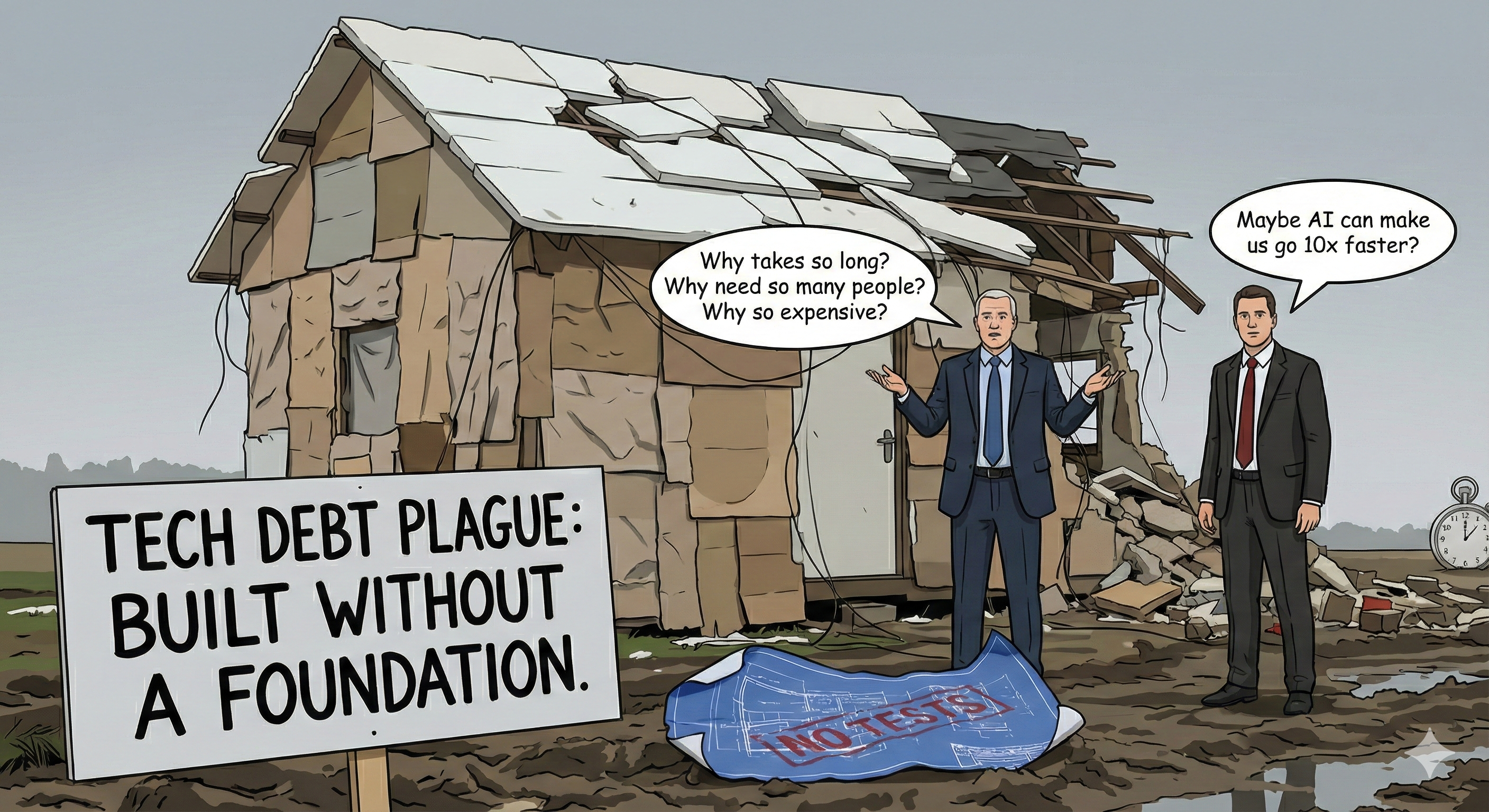
PS: Image created with Gemini 3 - Banana Pro model
When I was thinking about this section, I was thinking in terms of “Tech Debt First”. Because often I see tech debt being the “default choice,” which is an anti-pattern. Some technical principles should be non-negotiable.
Imagine you are building a house. Pretty sure the buyer does not expect the house to collapse 6 months later after buying it. To cut corners, you would not decide to use paper for walls, styrofoam for the roof, and direct sunlight for electricity. However, when we build software, bad management, bad architects, and bad developers decide to cut corners to the point of making the software collapse after a few months of being in production.
One classical example is skipping tests. Tests are not nice to have; they are a must-have. If you do not have tests, you are building a house without a foundation. You can build it fast, but sooner or later it will collapse. How will you do refactoring without tests? Management often pushes for such bad practices, but even architects (the bad ones) push for that. Tests are non-negotiable.
You must fight the war, manage complexity by doing improvements with the engineering team every week rather than “creating a Jira ticket” that will never ever be addressed.
Why you need to know this?
Tech debt is everywhere. You will see it and even produce it. You must be aware of it and fight it constantly. Some ideas to fight tech debt:
- Always make the code better
- Take quick wins like: add 1-3 tests per day, refactor 1-2 methods per day, improve documentation a bit every day
- Explain, evangelize, and educate the team about tech debt and how to improve
- Push back, say NO to bad practices, bad decisions, bad shortcuts
- Explain the cost of tech debt to management
- Use your time wisely, make your part to reduce tech debt